
Bianca Lorenz · 13 September 2026
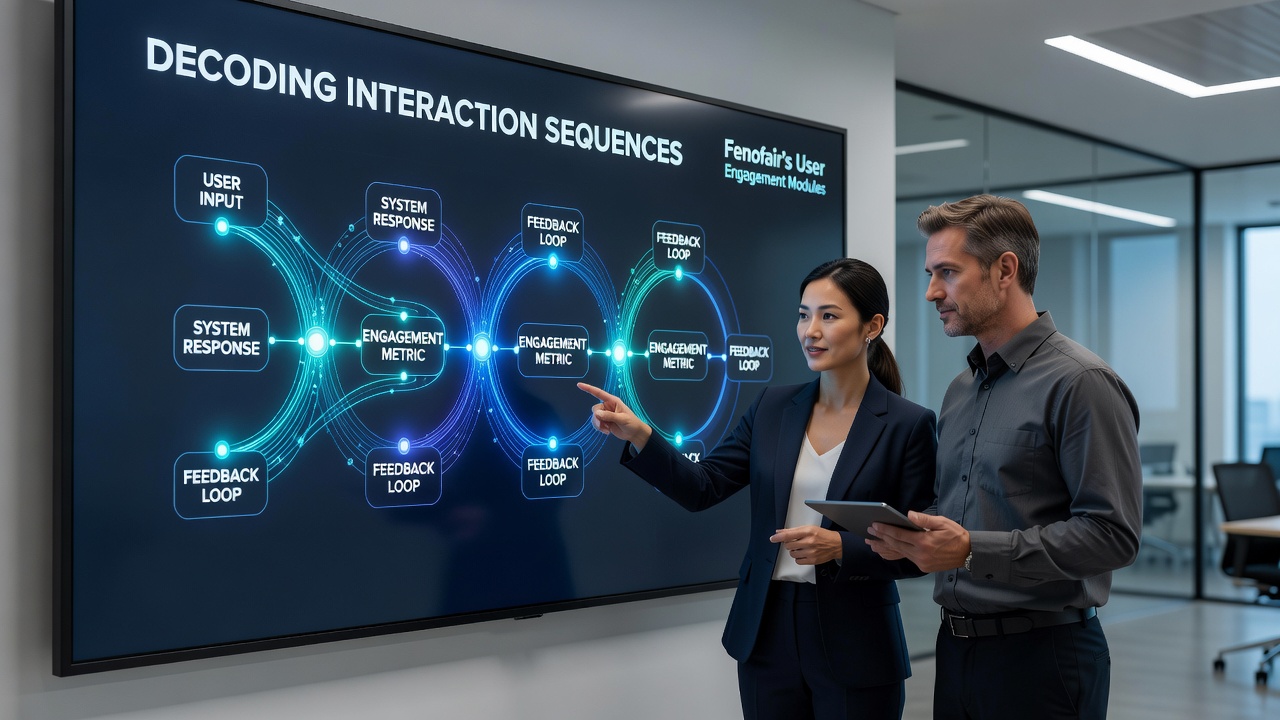
Decoding Interaction Sequences in Fenofair's User Engagement Modules
Interaction sequences in Fenofair's user engagement modules represent ordered patterns of clicks, scrolls, and form submissions that users generate while navigating specific platform features, and these patterns allow analysts to map how individuals progress through content layers. Researchers at several institutions have examined these sequences by collecting timestamped event data from module interfaces, then applying sequence mining algorithms to identify recurring paths that correlate with higher retention metrics. Data from platform logs collected through 2025 shows that sequences involving at least three distinct module transitions occur in approximately 68 percent of active sessions, while shorter sequences remain common in initial onboarding stages.
Core Components of Sequence Mapping
Fenofair structures its engagement modules around distinct functional areas such as profile customization, content discovery, and notification handling, each of which records discrete user actions in a central analytics repository. Sequence mapping begins when the system logs an entry event, then tracks subsequent actions until an exit or idle threshold is reached; this approach produces linear strings that can be compared across user cohorts. Observers note that modules handling content discovery generate the longest average sequence lengths, often exceeding seven events per session, whereas notification modules tend to produce sequences of two to four events before users return to primary navigation.
Analysts apply techniques including Markov chain modeling and frequent pattern mining to these strings, revealing transition probabilities between specific actions such as viewing a recommendation followed by a save operation. In September 2026, updated logging parameters introduced finer granularity for scroll depth events, allowing more precise differentiation between passive scanning and active engagement within discovery modules. Those parameters have already contributed to revised models that account for dwell time variations across device types.
Analytical Techniques and Data Sources
Sequence decoding relies on a combination of rule-based filters and machine learning classifiers that categorize user paths according to predefined engagement goals. Rule-based filters isolate sequences that match known high-value patterns, such as repeated returns to the same content category within a single session, while classifiers trained on historical data predict the likelihood of sequence completion. Figures released by the Australian Bureau of Statistics on digital platform usage indicate that similar sequence analysis methods have been adopted in public sector analytics projects, providing comparative benchmarks for private platform implementations.
Additional validation comes from academic studies conducted at institutions including the University of Melbourne, where researchers tracked parallel sequences in educational engagement platforms and reported alignment between sequence complexity and reported user satisfaction scores. These findings support the application of comparable methods within commercial modules like those deployed by Fenofair, where sequence length and branching frequency serve as proxy indicators for sustained interaction.
Module-Specific Sequence Patterns
Within the profile customization module, sequences frequently begin with an avatar selection event followed by preference toggles and conclude with a save confirmation, yet deviations appear when users revisit the module multiple times before finalizing changes. Content discovery sequences show greater variability, incorporating loops between search input, result filtering, and preview actions before a selection occurs. Notification handling sequences typically follow a linear path from alert receipt to read status update, though interruptions from external app switches create branched variants that require separate handling in analysis pipelines.
Platform documentation indicates that module boundaries are designed to capture cross-module transitions explicitly, enabling reconstruction of full user journeys that span multiple engagement areas. This design choice has facilitated identification of gateway sequences that reliably precede longer exploration paths, information that informs adjustments to default navigation elements.
Implementation Considerations for Sequence Analysis
Teams implementing sequence decoding must address data privacy requirements by anonymizing user identifiers before pattern extraction begins, a step that aligns with guidelines from the Office of the Privacy Commissioner of Canada on handling behavioral telemetry. Processing pipelines apply aggregation at the cohort level rather than individual level when generating reports, reducing re-identification risks while preserving statistical power for pattern detection. Storage durations for raw event logs remain limited to periods necessary for model training, after which only derived sequence statistics are retained.
Integration with existing Fenofair infrastructure involves API endpoints that expose sequence summaries without exposing raw event streams to downstream tools, maintaining separation between operational data and analytical outputs. This separation supports iterative refinement of decoding rules without requiring full system redeployment.
Conclusion
Decoding interaction sequences within Fenofair's user engagement modules provides structured insight into how users navigate functional areas and transition between them, supported by established analytical methods and external validation from statistical agencies and academic sources. Continued refinement of logging parameters, as seen in the September 2026 updates, extends the resolution of these sequences while preserving compliance with regional data handling standards. The resulting models contribute to platform adjustments that align module behavior with observed user pathways.